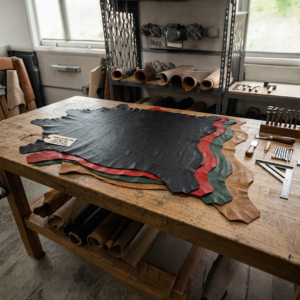
Lambskin vs goatskin is one of the most common questions in fine leatherwork, and there’s a good reason: both hides feel beautiful in the hand, both are luxury-grade, and both are popular with bag and jacket makers around the world. When you’re shopping for a soft leather, the choice almost always comes down to these two contenders. But the lambskin vs goatskin decision matters more than most beginners realize — they perform very differently once you start cutting, stitching, and wearing them.
This guide compares the two head-to-head across the six metrics that actually matter to crafters and buyers. By the end you’ll know exactly which hide belongs in your next project.
Lambskin vs goatskin: at a glance
Lambskin comes from young sheep and is prized for its silky, almost weightless feel. Goatskin comes from adult goats and offers a more textured grain with significantly higher tear strength. Lambskin is the softer of the two; goatskin is the tougher. Both can last decades with proper care.
If you’ve already read our deep dive on lambskin vs. cowhide, think of goatskin as sitting between those two — softer than cowhide, sturdier than lambskin.
Softness and hand feel
Lambskin wins this round, no contest. Run your hand across a quality lambskin hide and it feels like fine silk — smooth, cool, with almost no friction. Goatskin has a slightly grainier touch, more like fine sandpaper that’s been worn down. Neither is unpleasant, but for items that touch the skin (gloves, scarves, garment linings), lambskin is the obvious pick.
Durability and tear strength
Goatskin is roughly twice as strong as lambskin pound-for-pound. Its fiber structure is denser and more interlocked, which is why it’s the traditional choice for motorcycle gloves, hiking boots, and work bags that take real abuse. Lambskin is durable for fashion garments and accessories but isn’t built for heavy daily punishment.
Grain pattern and appearance
Goatskin has a distinctive pebbled grain — small, regular bumps that catch light and add visible texture. Many designers love this pattern because it hides scratches and gives bags a rich, organic look. Lambskin has a much smoother, almost uniform surface with very fine pores. It looks more “luxury minimalist,” which is why brands like Chanel use it for their iconic quilted bags.
Weight, thickness, and drape
Lambskin is significantly thinner — typically 0.6 to 0.9 mm — while goatskin runs 0.8 to 1.2 mm. That extra thickness gives goatskin a slightly stiffer drape that holds shape well in structured bags. Lambskin’s lighter weight makes it ideal for soft, slouchy bags and unlined garments where the leather should flow with movement.
Price comparison
Per square foot, lambskin and goatskin tend to be priced within 15–20% of each other at retail. Premium lambskin (Grade A) often runs slightly higher because the soft hand commands a fashion premium. Goatskin is typically cheaper for the same surface area but has more variation in dye uptake from hide to hide.
Best uses for each hide
Choose lambskin for: luxury jackets, soft handbags, wallets, glove linings, premium book bindings, and any project where drape and silky feel matter most.
Choose goatskin for: structured bags, work gloves, riding gear, shoe uppers, journals, and projects where the leather needs to take a beating and keep its shape.
The verdict
Neither hide is “better” in absolute terms — they’re optimized for different jobs. If you want the absolute softest, most luxurious feel and your project doesn’t take heavy abrasion, lambskin wins. If you need ruggedness and a visible grain pattern, goatskin is the smarter call. Many seasoned crafters keep both on hand for exactly this reason. For more on choosing the right hide, see our lambskin leather care guide.
Shop Premium Lambskin Leather Hides
Looking for the perfect material to apply these lambskin vs goatskin techniques on? Our Grade A lambskin hides come in 8–10 sq ft pieces, hand-selected for soft temper, even grain, and consistent thickness. Available in black, beige, dark green, red, and tobacco — perfect for jackets, bags, wallets, and craft projects.
Frequently Asked Questions
Is lambskin or goatskin better for a first leather bag?
For your first sewn bag, goatskin is more forgiving — it doesn’t stretch as easily and is harder to tear with a misplaced stitch. Once you have a few projects under your belt, lambskin becomes more rewarding.
Which leather is warmer for jackets?
Lambskin is warmer per millimeter because the fiber structure traps more air. Goatskin breathes a bit more, which makes it better for transitional spring jackets and worse for deep winter.
Does goatskin have a stronger smell than lambskin?
Slightly, yes. Fresh goatskin can have a stronger natural scent for the first few weeks, which fades with airing and conditioning. Lambskin tends to be nearly odorless from day one.
Can I substitute lambskin for goatskin in a pattern?
You can, but expect more stretch and slightly less structural integrity. Reinforce stress points (handles, corners) with an extra layer or interfacing if you make the swap.