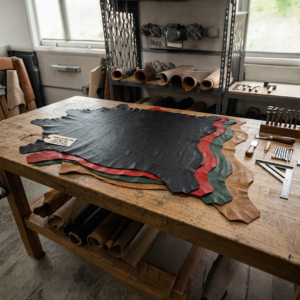
If you need to store lambskin leather for more than a few weeks, get the basics right or you’ll regret it. The fastest way to ruin a beautiful lambskin hide isn’t wearing it — it’s storing it wrong. We see it constantly: a perfect Grade A skin pulled from a closet two years later, stiff, cracked, sometimes spotted with mold. Every one of those failures was preventable. Learning to store lambskin leather properly is half the battle of owning leather, and the techniques are simple once you learn them.
This guide walks through everything: the right space, the right materials, the right shape — for hides, garments, and finished goods.
The 3 enemies when you store lambskin leather
Three things destroy stored lambskin: extreme humidity (above 70% feeds mold; below 30% causes cracking), permanent creases (any fold left in place for more than a few weeks becomes a stress line), and oxygen-blocking storage (plastic bags trap moisture and starve the hide). Get those three right and your leather stays beautiful for decades.
Choosing the right storage space
The ideal storage space is cool (60–70°F / 16–21°C), dark, and well-ventilated. A bedroom closet is perfect; a basement is usually too humid; an attic is usually too hot and dry. If you only have a problematic space, you can fix it: a small dehumidifier handles a damp basement, and a bowl of water handles a dry attic.
Avoid garages entirely. Temperature swings between summer and winter destroy lambskin faster than almost any other condition.
How to store unused lambskin hides
Roll, never fold. Use a 3-inch cardboard tube as a core (a paper towel tube works for small hides), and roll the leather smooth-side in. Wrap the rolled hide loosely in unbleached muslin or acid-free tissue, then store flat or upright on a shelf. Never stack heavy items on top.
If you’ve just received a hide and it’s stiff from cold transit, let it come to room temperature for 24 hours before rolling — this prevents the surface from cracking during the unroll. For more on softening newly arrived hides, see our guide on how to soften lambskin leather.
How to store lambskin garments
Always hang lambskin jackets and coats on a wide, padded hanger — never wire. Wide shoulders distribute the weight; narrow ones leave permanent dimples. Cover the garment with a breathable cotton garment bag, never plastic. Leave at least 2 inches of space between garments so air can circulate.
For long-term storage (more than 6 months), brush the garment with a soft horsehair brush before bagging it. This removes the dust that would otherwise embed in the fibers.
How to store lambskin bags and small goods
Stuff each bag lightly with acid-free tissue paper or an unbleached cotton pillow to maintain its shape. Don’t use newsprint — the ink transfers and stains lining. Store the bag in its original dust bag if you have one, or in a cotton pillowcase if you don’t. Place the bag upright on a shelf, not stacked on top of others.
Seasonal rotation tips
Twice a year — when seasons change — pull all your stored lambskin out, brush it gently, and let it air for 30 minutes. This single habit prevents the slow stiffness that comes from being undisturbed for months. While the leather is out, give it a light pass with a quality conditioner if it’s been more than 6 months since the last application.
How to inspect stored leather
Check stored items every 2–3 months for the warning signs: white powdery patches (early mold), greasy spots (old conditioner separating), unusual stiffness in one area (oil migration), or musty smell. Any of these means it’s time for the airing-and-conditioning routine. Catching problems early is the difference between a 5-minute fix and a $200 restoration. Our lambskin leather care guide covers the full inspection routine.
Shop Premium Lambskin Leather Hides
Looking for the perfect material to apply these store lambskin leather techniques on? Our Grade A lambskin hides come in 8–10 sq ft pieces, hand-selected for soft temper, even grain, and consistent thickness. Available in black, beige, dark green, red, and tobacco — perfect for jackets, bags, wallets, and craft projects.
Frequently Asked Questions
Can I freeze lambskin to kill insects or mold?
Brief freezing (48 hours in a sealed bag) can kill some pests, but it’s risky for lambskin — the fiber structure can become brittle. Use only as a last resort and condition immediately after thawing.
Is it OK to vacuum-seal lambskin for storage?
No. Vacuum-sealing eliminates the air circulation lambskin needs and creates permanent compression marks. Always store leather loosely with breathable wrapping.
How do I store lambskin in a humid climate?
Use a small dehumidifier in the storage room and add silica gel packs (the kind sold for safes) to garment bags. Aim for 40–60% humidity. Check leather monthly during peak humidity months.
Should I condition lambskin before long-term storage?
Yes — a light conditioning before storage protects the fibers. Use about half your normal amount and let it absorb for 24 hours before bagging the item.